
Radiology
The fight against breast cancer in numbers: what has been won and what is still missing
Every October 19, there is a lot of talk about breast cancer. This article is about something else: the fight against it. What has been won over the past decades, what targets the world has set, where Colombia stands and what part of that fight is in your hands.
Every figure comes from the most recent publications available: WHO and IARC, Colombia’s Ministry of Health and Social Protection, the High-Cost Diseases Fund (Cuenta de Alto Costo) and the American Cancer Society. You will find each source at the end of the article.
The fight is paying off
The good news first: breast cancer is one of the cancers where the most progress has been made.
In the United States, the death rate fell 44% between its 1989 peak and 2023, according to the progress report Susan G. Komen published in February 2026. That amounts to some 546,000 deaths averted. The report credits two things: earlier detection through screening and better treatments.
In July 2026, WHO and IARC published in Nature Medicine the first breast cancer survival estimates for all 194 WHO Member States. For women diagnosed between 2017 and 2021, the global median five-year survival was 77.8%. The Region of the Americas has the highest figure in the world: 88.5%.
But it is not being won equally everywhere
The same study shows the other side: in the African Region, five-year survival is 39.1%. The difference comes, above all, from access to timely diagnosis and treatment.
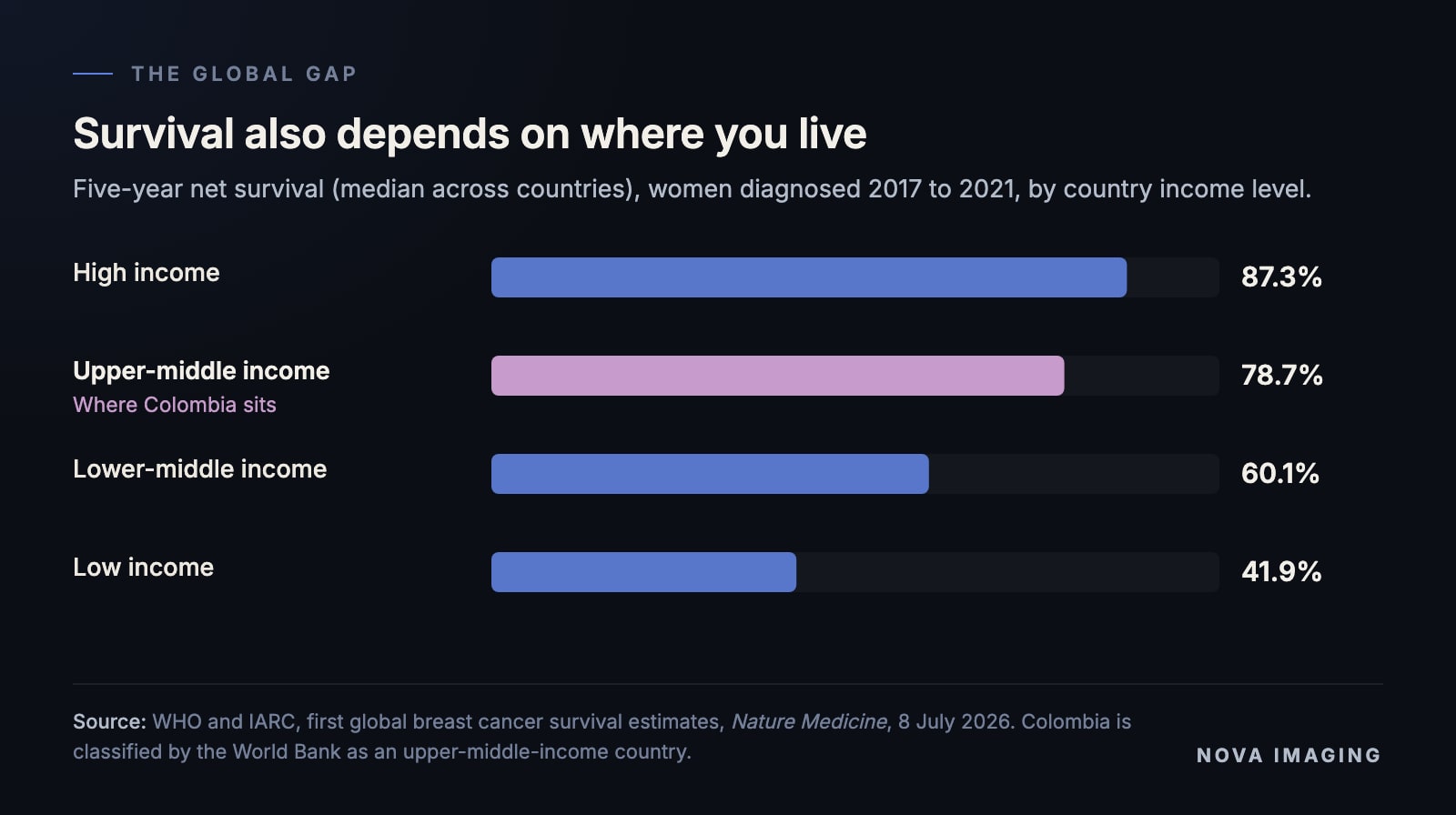
Colombia belongs to the upper-middle-income group, where the median is 78.7%. Note that this is the figure for the group of countries, not Colombia’s own. It makes one thing clear: the difference between winning and losing this fight lies not in biology but in the health system.
Everything comes down to getting there in time
If one figure sums up why early detection is the main weapon, it is this one:
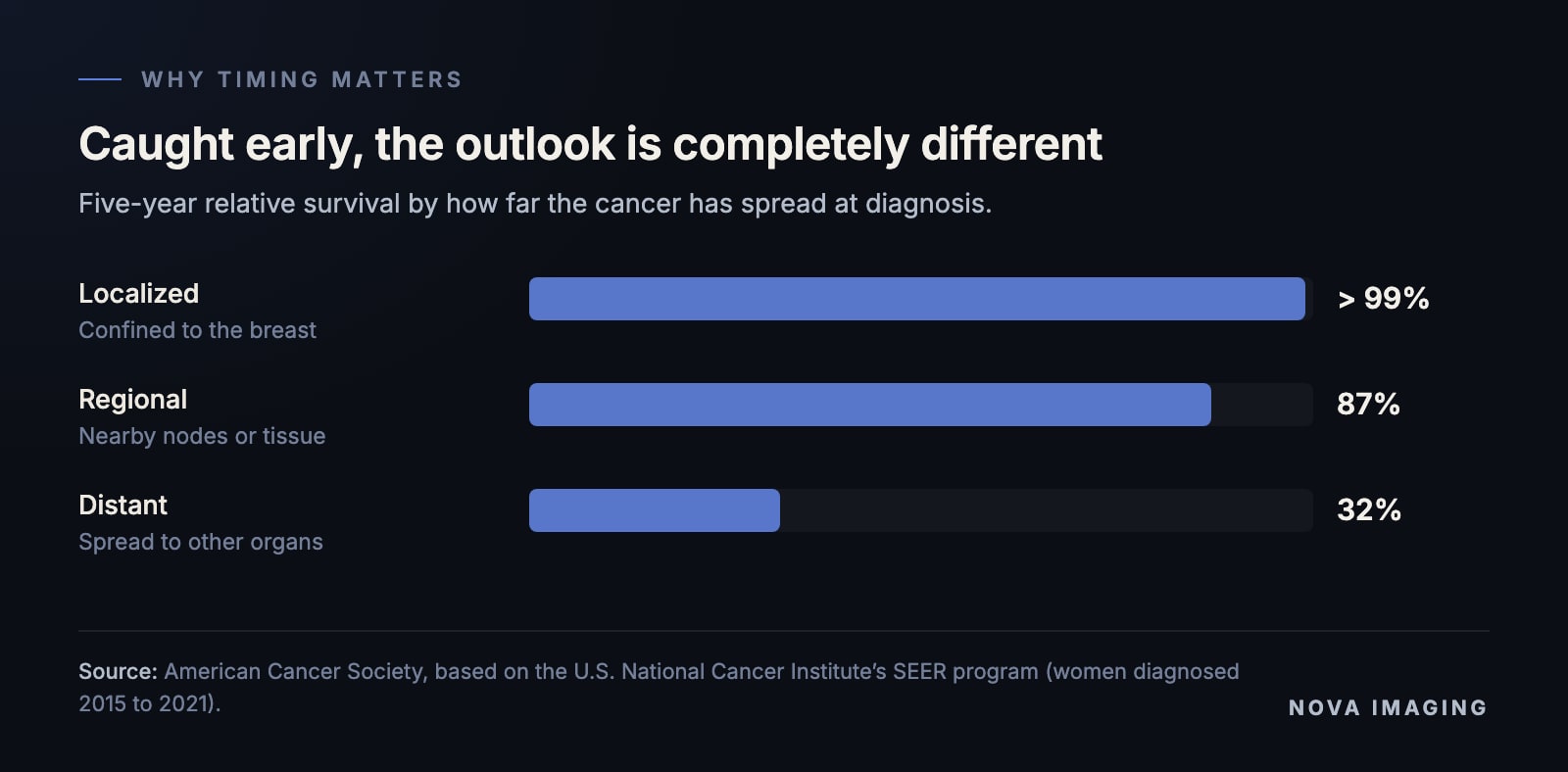
When the cancer is detected while still confined to the breast, more than 99 out of 100 women are alive five years later. Once it has spread to other organs, that number drops to 32.
A second figure is worth keeping in mind, because it breaks a very common myth. According to the American Cancer Society (October 2026), more than 85% of women diagnosed with breast cancer have no family history of the disease. Having no one in your family with breast cancer is no reason to skip your mammogram.
The global roadmap: 60, 60, 80
WHO sums up the fight in three targets every country should reach by 2040, under its Global Breast Cancer Initiative:
- 60% of invasive breast cancers diagnosed at an early stage (stages I and II).
- Complete diagnosis within 60 days of the first visit.
- 80% of patients completing their treatment, without dropping out.
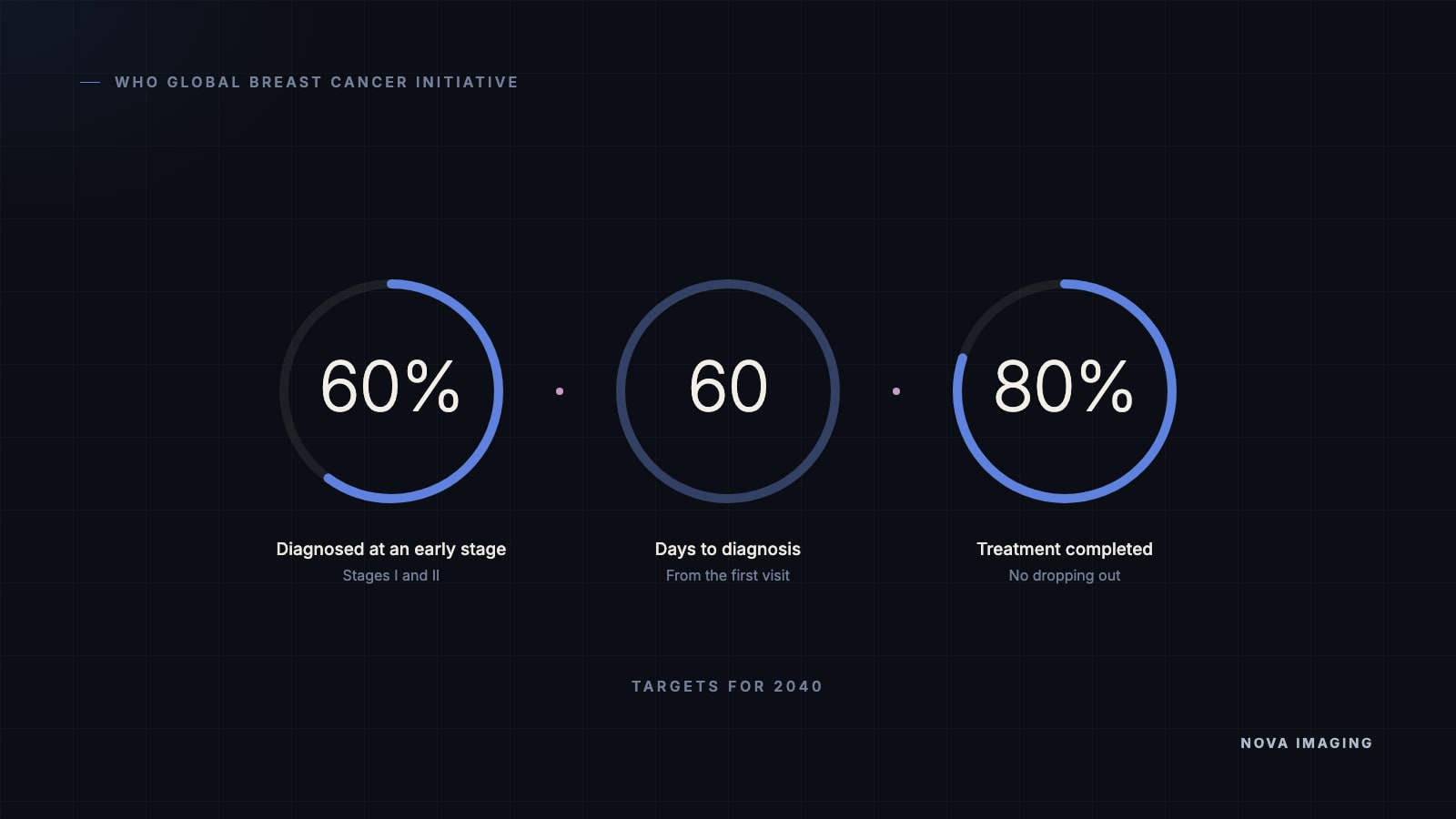
They are three easy-to-grasp targets, and each one measures a different link in the chain: detect, diagnose and treat.
Colombia in this fight
First, the size of the challenge. According to GLOBOCAN 2024, the IARC estimates published in September 2026, Colombia sees 17,739 new cases a year and 4,773 deaths. It is the most common cancer among women and also the one that takes the most women’s lives. That works out to almost 49 diagnoses and 13 deaths every day.
Unlike in the United States, mortality in Colombia has not started to fall yet: the age-adjusted rate went from 11.5 per 100,000 women in 2015 to 11.9 in 2024, according to the Ministry of Health. The fight here is further behind, which is why every step forward counts.
And there are real steps forward:
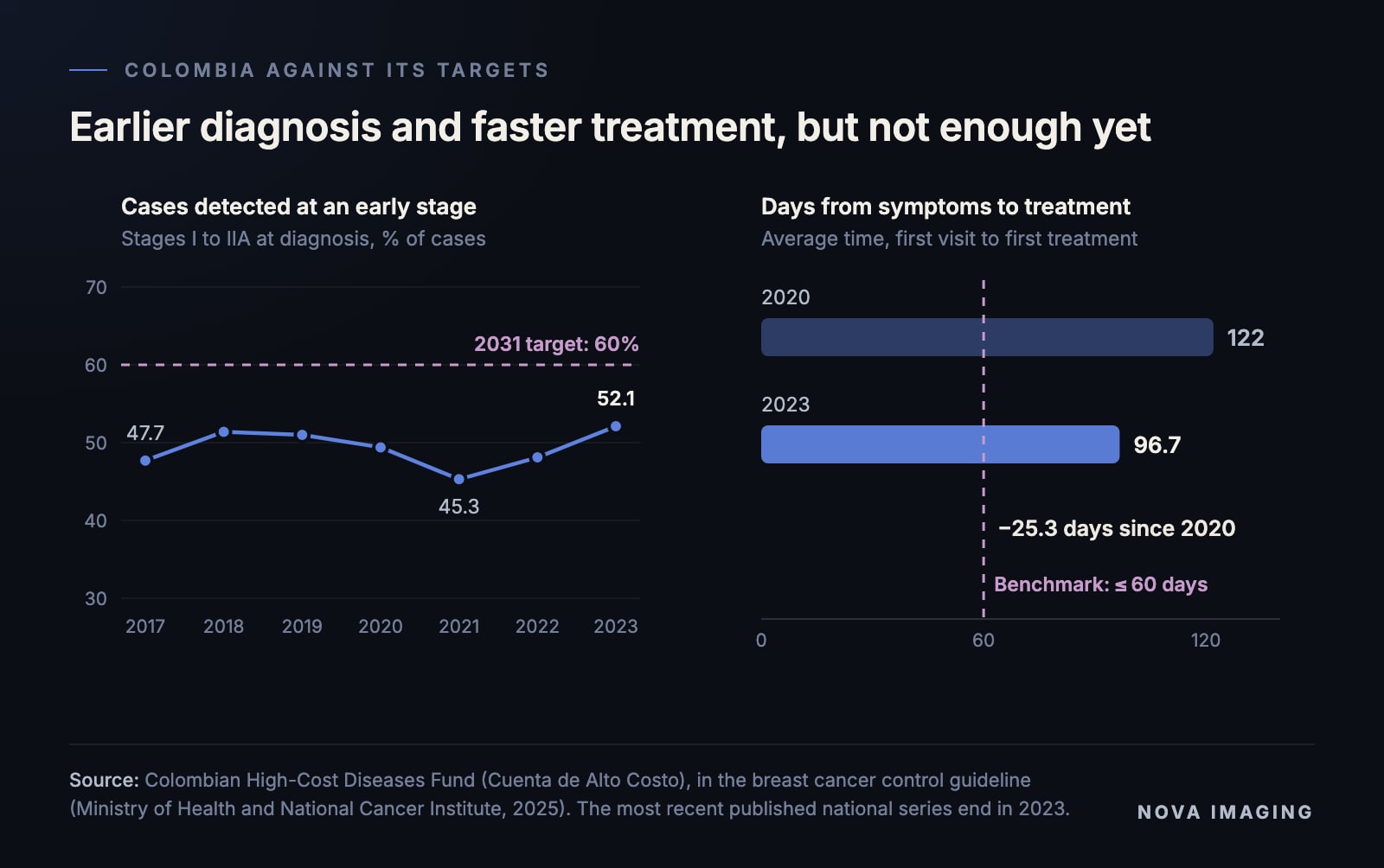
- Diagnosis is coming earlier. In 2023, 52.1% of cases were detected at an early stage (stages I to IIA), the best result in the series. The national target is 60% by 2031.
- Treatment is starting sooner. The average time from the first visit for symptoms to the start of treatment fell from 122 days in 2020 to 96.7 days in 2023. That is almost four weeks less waiting, though still far from the 60-day benchmark.
These series were published by the Ministry of Health and the National Cancer Institute in 2025, using data from the High-Cost Diseases Fund, and they are the most recent available at the national level.
Mammography is advancing, but it does not reach everyone yet
In Colombia, the rules (Resolution 3280 of 2018) call for a mammogram every two years for women aged 50 to 69, and a clinical breast exam for women aged 40 to 49. Health insurers and providers are required to comply.
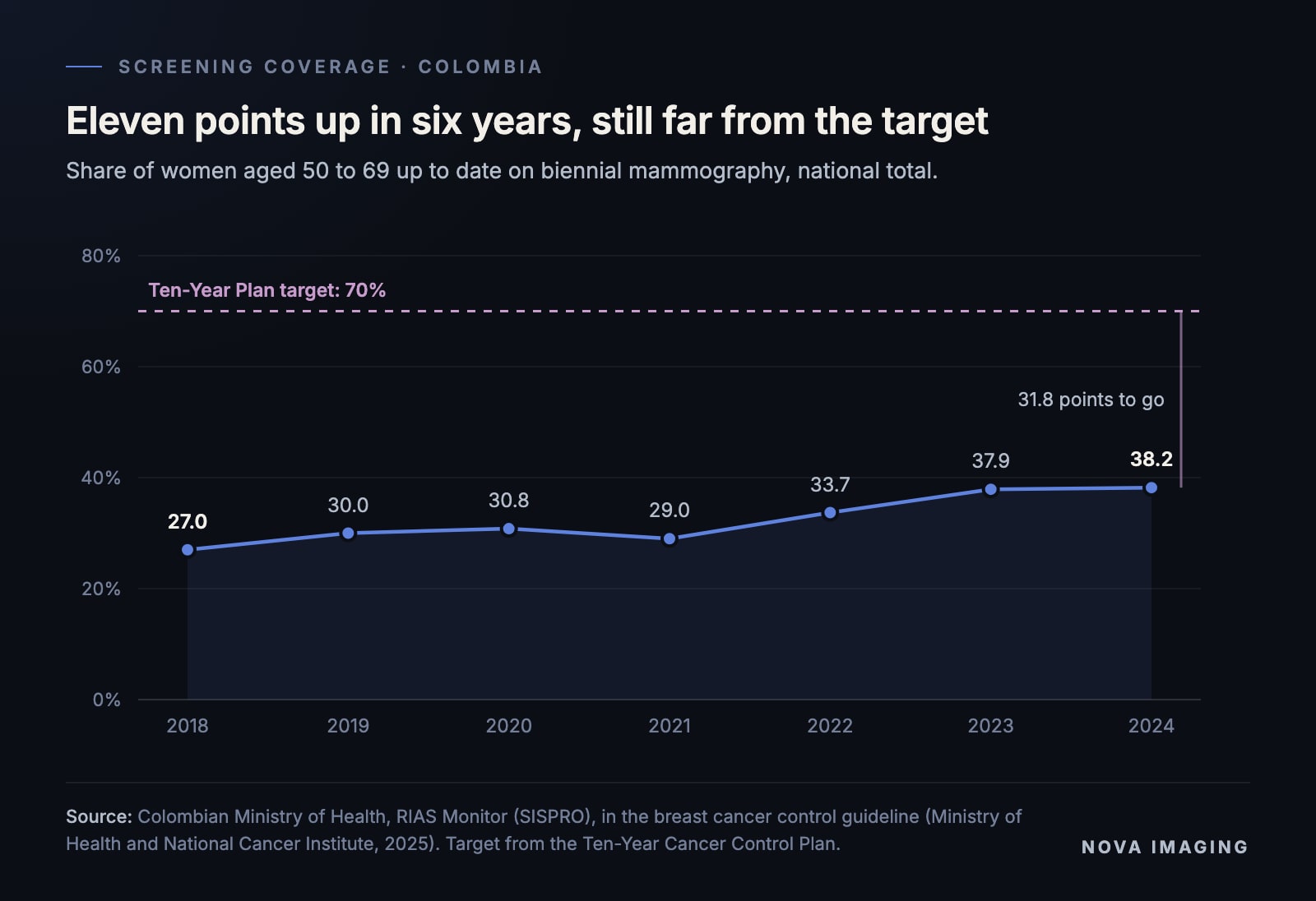
In six years, coverage rose from 27.0% to 38.2%. That is progress, but the target set by the Ten-Year Cancer Control Plan is 70%. Put another way: out of every ten women who should be up to date on their mammogram, fewer than four are.
And coverage is not the same across the country:
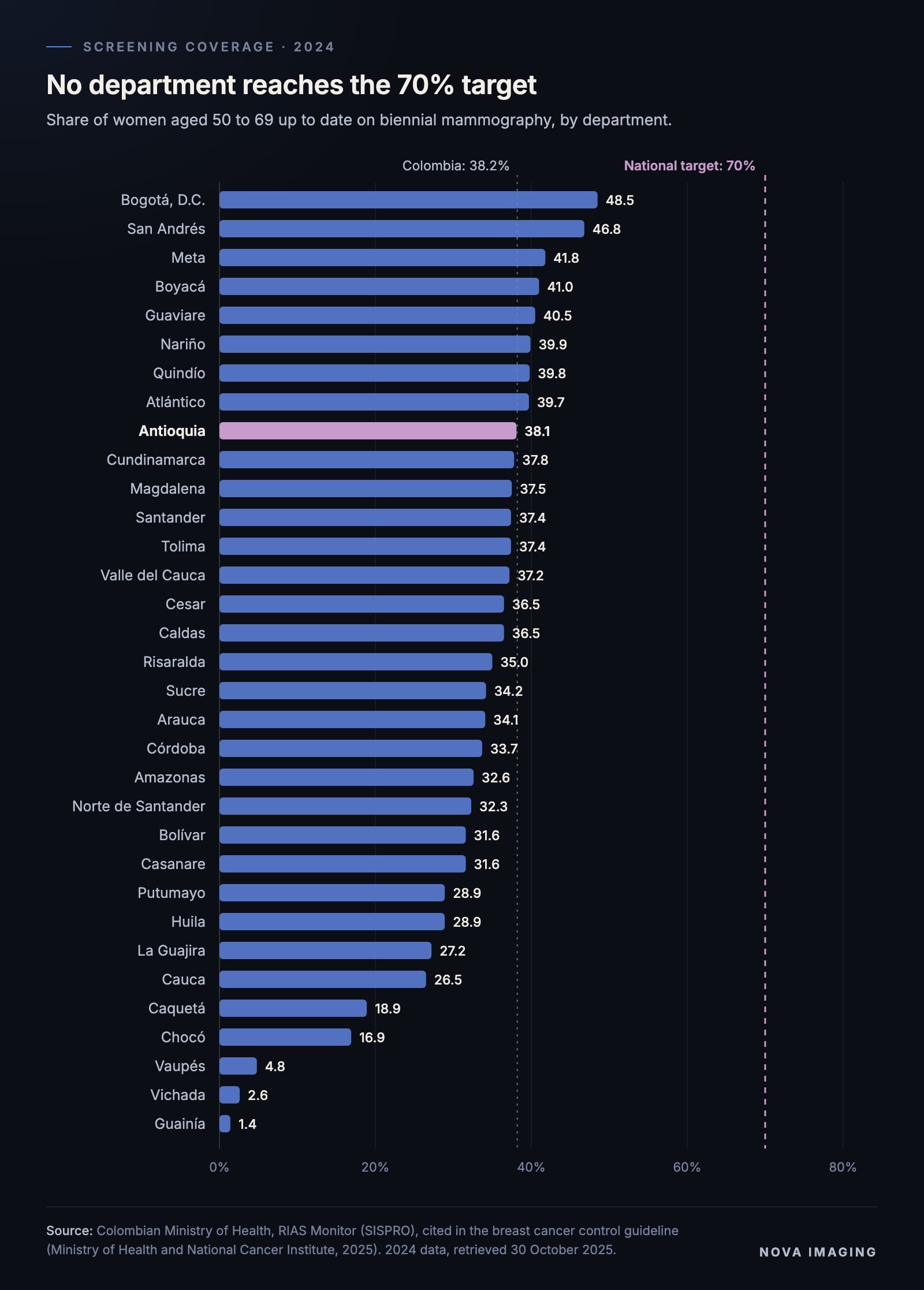
Bogotá tops the list at 48.5%, followed by San Andrés, Meta, Boyacá and Guaviare, all above 40%. Antioquia stands at 38.1%, right around the national average. At the other end, Vaupés, Vichada and Guainía are below 5%: these are departments with a scattered population and very few mammography units. In those areas, the Ministry prioritizes clinical breast exams while the network expands.
No department has reached the target yet. That is why this fight is not only up to hospitals: it is also won every time a woman asks for the mammogram she is entitled to.
New tools for the same fight
Mammography remains the foundation of early detection, and technology is helping make the most of it.
In January 2026, The Lancet published the final results of the MASAI trial, carried out in Sweden with more than 106,000 women. In that trial, artificial intelligence supported radiologists in two ways: it prioritized studies by risk level and flagged suspicious findings for the specialist to review. The result was 12% fewer interval cancers (those that appear between two screenings, which the previous mammogram did not catch) and 27% fewer cases of the most aggressive subtypes, with no increase in false alarms. Radiologists’ reading workload also fell by 44%.
The decision still belongs to the radiologist. What changes is that they have a second pair of eyes and more time for the cases that truly need it. In a country where waiting times are part of the problem, that is also part of the fight.
What age to start? Experts disagree, but agree on what matters
In April 2026, the American College of Physicians (ACP) recommended starting routine mammography at age 50. The American College of Radiology (ACR) and the Society of Breast Imaging (SBI) responded that this guidance could cost lives and reaffirmed their recommendation of a mammogram every year from age 40.
The debate is about when to start. No one disputes whether to do it. If you are unsure about the right time for you, that conversation belongs with your doctor, who knows your history and your risk factors.
What you can do today
- If you are between 50 and 69, check when your last mammogram was. If it was more than two years ago, ask your health insurer for one: it is a right, not a favor.
- If you are between 40 and 49, ask for a clinical breast exam at your next checkup and talk to your doctor about your personal risk and when to start mammography.
- Know your body, at any age. If you notice a lump, a change in the skin or nipple, or any discharge, see a doctor right away, without waiting for your next mammogram. Knowing your body does not replace a mammogram, but it lets you act in time.
And a fourth step that matters more than it seems: share this with the women in your life. A timely conversation may be what gets someone to book her appointment.
At NOVA Imaging we work with the imaging services that make this fight possible every day, so that every study is read, reported and delivered on time to the people who need it.
Sources
- WHO and IARC. Global breast cancer survival estimates in 2017–2021 to advance the WHO Global Breast Cancer Initiative. Nature Medicine, 8 July 2026. WHO news release.
- IARC. GLOBOCAN 2024, Colombia fact sheet. Global Cancer Observatory, September 2026. gco.iarc.who.int.
- Colombian Ministry of Health and Social Protection and National Cancer Institute. Guideline for strengthening breast cancer control actions under Colombia’s Shock Plan (in Spanish), 2025. Includes data from the RIAS Monitor (SISPRO) and the High-Cost Diseases Fund. minsalud.gov.co.
- American Cancer Society. Breast cancer survival rates and Breast Cancer Awareness Month release, 1 October 2026. cancer.org · pressroom.cancer.org.
- Susan G. Komen. Breast Cancer Progress Outlook 2026, February 2026.
- Lund University. Final results of the MASAI trial, published in The Lancet, January 2026. lunduniversity.lu.se.
- American College of Radiology. Response to the ACP screening guidance, April 2026. acr.org.
This article is for information only and does not replace medical advice. If you have symptoms or questions about your risk, talk to your doctor.